

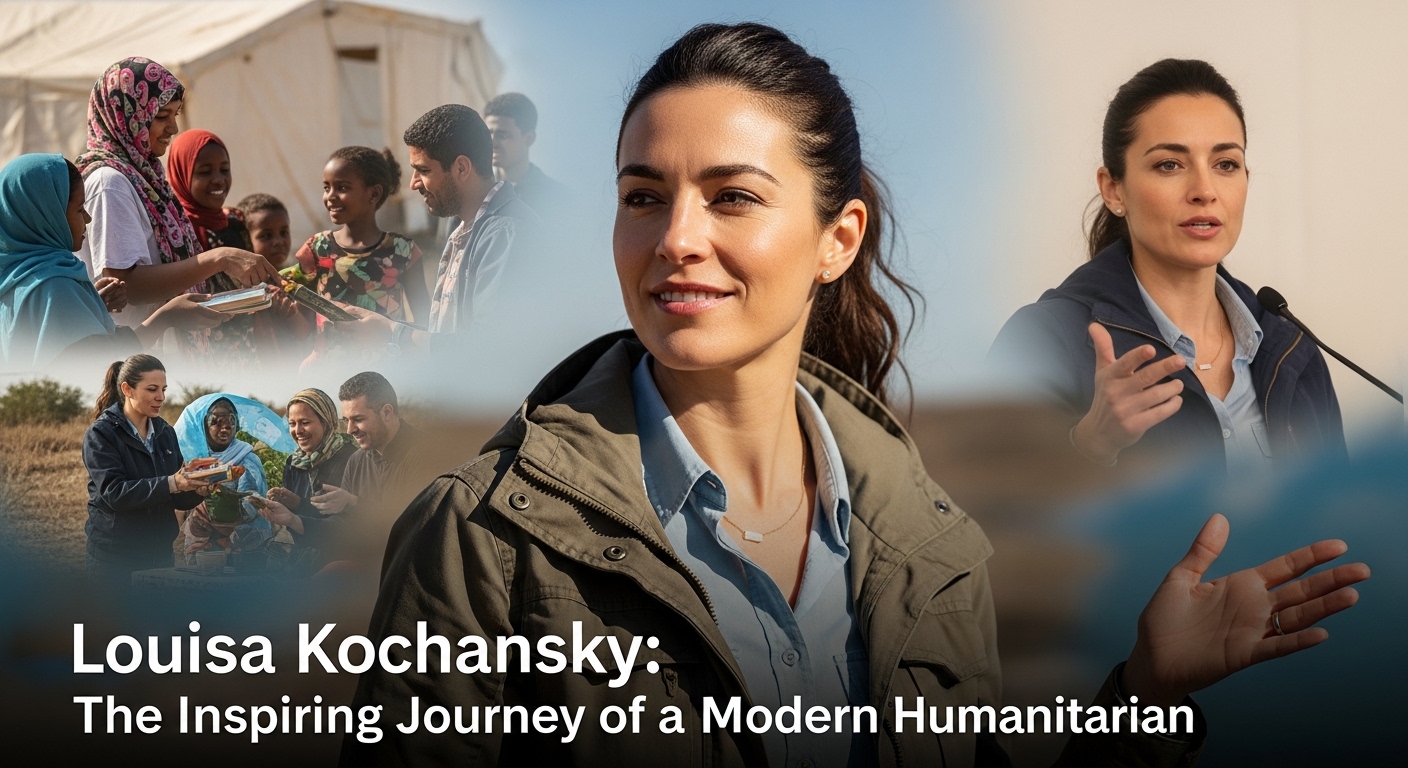
In an age where headlines often highlight conflict, competition, and corporate ambition, stories of genuine compassion stand out more than ever. The journey of Louisa Kochansky represents one of those rare narratives that combines determination, empathy, and a clear sense of global responsibility. Her story is not just about personal success—it is about using influence and opportunity to make a meaningful difference in people’s lives.
From humble beginnings to becoming a respected humanitarian voice, Louisa Kochansky has built a reputation rooted in service and thoughtful leadership. Her work reflects a modern understanding of philanthropy, one that blends community action, global awareness, and innovative thinking.
Rather than following the traditional path of fame or recognition, Kochansky’s journey highlights how purpose-driven individuals can create lasting impact in a rapidly changing world. Her story continues to inspire entrepreneurs, social innovators, and leaders who believe that success is measured not only by achievement, but also by contribution.
Early Life and the Foundations of Compassion
Every humanitarian story begins with a moment—or series of moments—that shape a person’s worldview. For Louisa Kochansky, those formative experiences came early. Growing up in an environment where community values and empathy were deeply encouraged, she developed a strong awareness of social inequalities and the importance of helping others.
Family influence played a major role in shaping her perspective. Conversations around fairness, opportunity, and responsibility created a mindset that looked beyond individual success. Instead of focusing solely on personal advancement, Kochansky became interested in understanding how communities function and why some groups struggle while others thrive.
Education further strengthened these values. Through exposure to global history, social development studies, and volunteer programs, she began to see how local actions could influence larger societal change. These early lessons planted the seeds for what would later become a lifelong commitment to humanitarian work.
Discovering a Path Toward Humanitarian Work
While many professionals enter philanthropy later in their careers, Louisa Kochansky found her direction relatively early. She realized that humanitarian work was not limited to charity events or donations; it required strategic thinking, sustainable solutions, and collaboration across sectors.
Her early career involved working with community-based initiatives that addressed issues such as education accessibility, social inclusion, and resource distribution. These experiences exposed her to the realities faced by marginalized populations and reinforced the idea that meaningful change requires both compassion and organization.
One defining aspect of Kochansky’s approach was her ability to connect people. She recognized that solving complex problems often involves bringing together diverse groups—business leaders, educators, policymakers, and volunteers. By building networks around shared goals, she helped transform small projects into impactful initiatives.
This collaborative mindset later became a cornerstone of her humanitarian philosophy.
Leadership in Modern Philanthropy
Humanitarian work today looks very different from traditional charity models. The modern approach focuses on sustainability, innovation, and empowerment rather than short-term relief. Louisa Kochansky embraced this shift early in her career.
Instead of simply responding to crises, she became interested in preventing them through education, infrastructure, and community empowerment. Her leadership style emphasizes long-term thinking and measurable impact.
She often highlights three core principles that guide effective humanitarian initiatives:
| Principle | Description | Impact |
|---|---|---|
| Community Engagement | Working directly with local communities to understand real needs | Builds trust and sustainable solutions |
| Strategic Collaboration | Partnering with organizations, experts, and volunteers | Expands resources and knowledge |
| Long-Term Vision | Focusing on lasting change rather than temporary relief | Creates enduring social improvements |
These principles have influenced the way many modern humanitarian projects are designed and implemented.
By applying structured planning alongside genuine empathy, Kochansky has helped redefine what effective humanitarian leadership looks like in the 21st century.
Bridging the Gap Between Innovation and Humanity
One of the most interesting aspects of Louisa Kochansky’s work is her ability to combine humanitarian values with modern innovation. While compassion drives the mission, technology and strategic thinking provide the tools to expand its reach.
Digital platforms, data analysis, and global communication networks have dramatically transformed how humanitarian efforts operate. Kochansky recognized early on that these tools could help organizations operate more efficiently and reach underserved populations faster.
For example, data-driven research can identify regions most in need of support, while digital platforms allow donors and volunteers to connect with projects in real time. By integrating technology into humanitarian strategy, initiatives become more transparent, scalable, and impactful.
This balanced approach ensures that humanitarian efforts remain human-centered while benefiting from modern advancements.
Advocacy and Public Awareness
Beyond direct humanitarian initiatives, Louisa Kochansky has also become a strong advocate for raising awareness about social issues. Advocacy plays a critical role in creating change because public understanding often drives policy decisions and resource allocation.
Through public speaking, collaborative campaigns, and community engagement programs, she has worked to highlight issues that might otherwise receive limited attention. Her advocacy focuses on education, equality, and community development.
One of her key messages is that humanitarian work is not limited to large organizations or international agencies. Everyday individuals, entrepreneurs, and local leaders can all contribute to positive change in meaningful ways.
By encouraging wider participation, Kochansky helps transform humanitarianism from a specialized field into a shared social responsibility.
Challenges Along the Way
No meaningful journey is free from obstacles, and the path of Louisa Kochansky has been no exception. Humanitarian work often involves navigating complex political, cultural, and logistical challenges.
Projects may face funding limitations, regulatory hurdles, or difficulties coordinating across multiple organizations. Additionally, addressing deep-rooted social problems requires patience and resilience.
Kochansky’s approach to these challenges has always centered on adaptability. Instead of viewing setbacks as failures, she treats them as learning opportunities that can improve future initiatives.
Her ability to remain optimistic while facing difficult realities has become one of the defining characteristics of her leadership style. It also reinforces an important lesson: sustainable humanitarian progress rarely happens overnight.
Influence on Future Leaders
Perhaps one of the most significant aspects of Louisa Kochansky’s journey is the influence she has had on emerging leaders. In a world where younger generations increasingly seek meaningful careers, her story demonstrates that success and service can go hand in hand.
Entrepreneurs and founders often look to figures like Kochansky as examples of how business skills, innovation, and social responsibility can work together. Many modern social enterprises now integrate humanitarian goals into their business models.
Educational institutions and leadership programs also highlight similar stories to encourage students to think beyond traditional career paths.
By sharing her experiences and insights, Kochansky contributes to a broader cultural shift—one that values impact as much as achievement.
The Evolving Role of Humanitarian Leadership
The concept of humanitarian leadership continues to evolve. Global challenges such as climate change, economic inequality, and public health crises require creative solutions and strong collaboration.
Louisa Kochansky’s work reflects this evolving landscape. Rather than relying on outdated frameworks, she embraces new ideas, partnerships, and technologies that allow humanitarian efforts to adapt to modern realities.
This forward-thinking approach is especially important for younger professionals entering the field. They must balance compassion with strategic thinking, combining emotional intelligence with analytical skills.
The future of humanitarian work will likely depend on leaders who can bridge these two perspectives effectively.
A Legacy of Purpose and Possibility
Looking at the broader impact of her journey, Louisa Kochansky represents more than a single humanitarian figure. She symbolizes a shift toward a more thoughtful and collaborative model of global service.
Her story reminds us that meaningful change rarely begins with grand gestures. Instead, it grows through consistent effort, strong partnerships, and a genuine commitment to helping others.
In a world filled with rapid technological and economic transformation, humanitarian voices like hers play an essential role in maintaining balance. They remind society that progress should benefit not just a few individuals but entire communities.
Conclusion
The journey of Louisa Kochansky offers an inspiring reminder that leadership rooted in empathy can create powerful change. Her work demonstrates how modern humanitarian efforts blend compassion with strategy, innovation, and collaboration.
As global challenges continue to evolve, the need for thoughtful leaders becomes even more important. Kochansky’s story encourages entrepreneurs, founders, and social innovators to think beyond profit and consider how their skills can contribute to the greater good.
Ultimately, the legacy of Louisa Kochansky lies not only in the initiatives she supports but also in the inspiration she provides. By showing that success and service can coexist, she opens the door for a new generation of leaders who believe that true achievement includes making the world a better place.