

In the bustling heart of a global economy, Sarah, a young entrepreneur, stared at her screen, overwhelmed by the sheer variety of industries she could enter. Her startup idea was clear, but the challenge lay in understanding where exactly her business fit. Was she entering a saturated market, or was her niche waiting to be discovered? This dilemma is a common story for many founders, and it underscores the importance of business vertical classification categories—a strategic framework that helps companies identify, categorize, and optimize their position in the marketplace.
Understanding these classifications is not just an academic exercise; it is a practical tool that drives investment decisions, marketing strategies, and operational focus. By knowing where your business fits, you can better analyze competitors, anticipate market trends, and tailor offerings to your target audience.
The Fundamentals of Business Vertical Classification
At its core, business vertical classification refers to the system of categorizing companies based on their industry, product type, or target market. Unlike horizontal markets, which are defined by the type of product or service offered across various industries, vertical markets focus on specific sectors with unique customer needs. For instance, a software company might target the healthcare industry, making it part of the healthcare vertical, even if similar software exists for finance or retail.
These classifications serve multiple purposes. Investors use them to understand market potential. Analysts rely on them to compare growth rates across sectors. Entrepreneurs leverage them to pinpoint opportunities for differentiation. Without a structured classification, businesses risk spreading resources too thin or misaligning their strategy with market realities.
Key Business Vertical Classification Categories
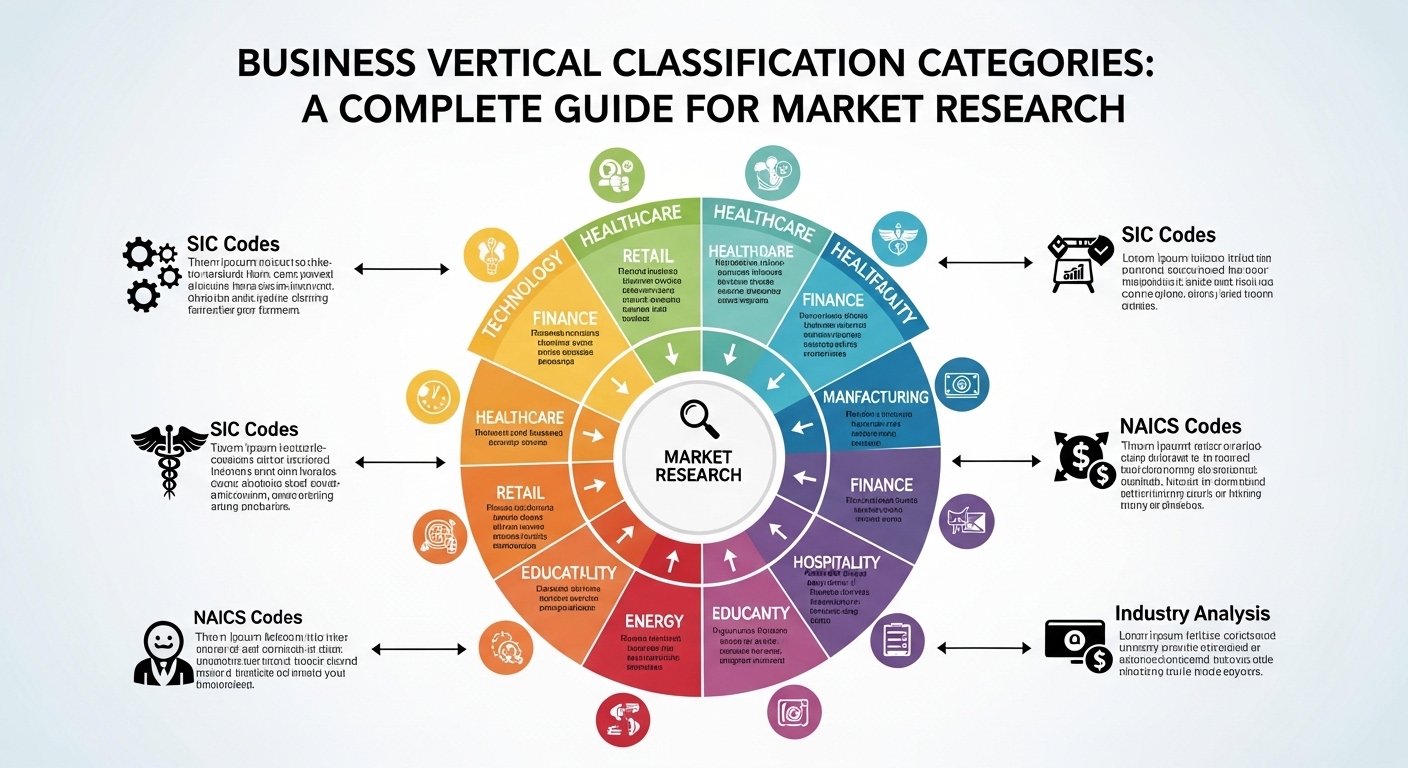
Businesses can be segmented into multiple vertical categories, each with distinct dynamics, consumer behavior, and competitive landscapes. Some of the most recognized classifications include:
-
Technology and Software – This vertical includes companies providing hardware, software, cloud solutions, and IT services. Rapid innovation defines this sector, making adaptability essential.
-
Healthcare and Life Sciences – Encompassing pharmaceuticals, medical devices, and health services, this vertical is highly regulated but offers robust growth opportunities due to aging populations and technological advancements.
-
Finance and Banking – From fintech startups to multinational banks, this sector emphasizes trust, compliance, and secure transaction infrastructure.
-
Retail and Consumer Goods – Covering both physical and digital commerce, this category is shaped by consumer trends, e-commerce growth, and brand loyalty.
-
Manufacturing and Industrial – Including automotive, machinery, and construction materials, this vertical is capital-intensive and often tied to macroeconomic cycles.
-
Energy and Utilities – Encompassing oil, gas, renewables, and public utilities, this sector is highly influenced by global policy and environmental trends.
Each vertical demands a specialized approach, with strategies tailored to customer needs, regulatory landscapes, and competitive pressures.
Why Vertical Classification Matters for Strategy
Consider marketing: a SaaS company focused on healthcare will adopt very different messaging than one serving finance. Healthcare stakeholders value compliance, patient outcomes, and data security, while financial clients prioritize efficiency, ROI, and risk mitigation. Knowing your vertical allows your business to speak the right language, allocate resources effectively, and build credibility faster.
Moreover, vertical classification informs investment and growth strategies. Venture capitalists often evaluate startups by the vertical market, looking for sectors with scalability, defensible positions, and regulatory barriers. Similarly, partnerships and mergers are influenced by alignment within a vertical. Misclassifying your business could result in missed opportunities or misdirected efforts.
Real-World Applications of Vertical Classifications
Businesses increasingly leverage vertical classifications to gain a competitive edge. For instance, companies use data analytics to benchmark performance against vertical-specific KPIs. Marketing campaigns are often designed to appeal to the precise challenges and desires of a vertical audience. Even product development benefits—features can be tailored to address the unique pain points of a sector rather than offering generic solutions.
A practical example is the rise of fintech solutions targeting healthcare payments. By recognizing the intersection of finance and healthcare verticals, companies can design products that meet compliance standards while addressing operational inefficiencies. This vertical-specific focus accelerates adoption and positions companies as experts rather than generalists.
Comparative Overview: Business Vertical Categories
The table below provides a snapshot of major verticals, illustrating their key drivers and considerations:
| Vertical Category | Key Drivers | Challenges | Example Companies |
|---|---|---|---|
| Technology & Software | Innovation, scalability | Rapid obsolescence | Microsoft, Salesforce |
| Healthcare & Life Sciences | Regulation, demographics | Compliance, high R&D costs | Pfizer, Medtronic |
| Finance & Banking | Security, trust | Regulatory complexity | JPMorgan Chase, Stripe |
| Retail & Consumer Goods | Trends, brand loyalty | Market saturation | Amazon, Unilever |
| Manufacturing & Industrial | Efficiency, scale | Capital intensity | Caterpillar, Siemens |
| Energy & Utilities | Policy, sustainability | Environmental impact, regulation | ExxonMobil, NextEra Energy |
This comparative perspective helps businesses recognize where their sector fits and what strategic levers are most relevant.
Emerging Trends in Vertical Markets
Vertical classification is not static. The digital era has blurred traditional boundaries, creating hybrid sectors. For example, the convergence of technology and retail has given rise to e-commerce platforms, AI-driven customer insights, and digital supply chains. Similarly, healthcare and AI intersect in predictive diagnostics and personalized medicine. Entrepreneurs must remain agile, continuously reassessing their vertical positioning as new markets emerge.
Sustainability and ESG (Environmental, Social, Governance) considerations also influence vertical dynamics. Companies that align with these trends within their classification—such as green energy startups or eco-conscious consumer brands—often gain a competitive edge, both in market appeal and investor attention.
Conclusion
For Sarah, and countless other founders, recognizing the right business vertical classification categories is more than a labeling exercise; it is a strategic compass. It guides marketing, informs investments, shapes product development, and influences partnerships. By understanding the nuances of vertical markets, entrepreneurs can position their businesses for sustainable growth, differentiation, and long-term success.
In today’s rapidly evolving economy, knowing your vertical is akin to having a map in uncharted territory—it transforms uncertainty into opportunity, helping businesses navigate markets with precision and confidence.